Cheap USB-C Cables Are Quietly Frying Devices — Here's How to Tell If Yours Is One of Them
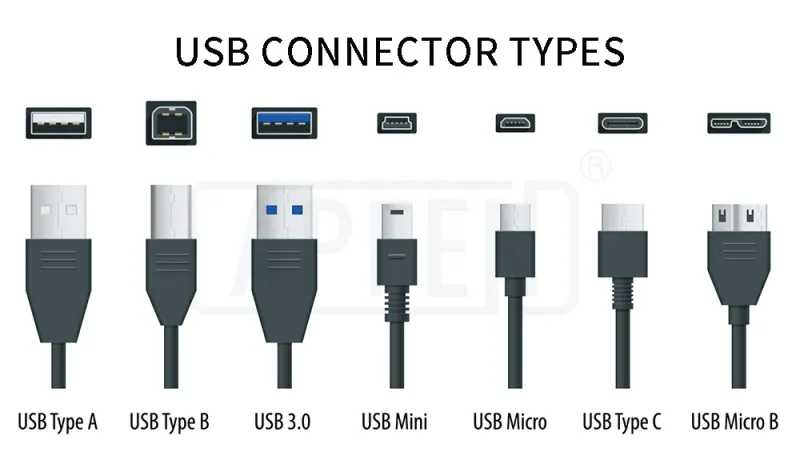
Photo: USB-C cable safety test melted damaged connector comparison, via www.szapphone.com
Walk into any Target, Best Buy, or scroll through Amazon for more than thirty seconds and you'll find USB-C cables stacked high and priced low. Some go for under $5 for a two-pack. Sounds like a deal, right? Here at AdapterVIP, we've spent a lot of time with connectors and adapters — and we'll tell you straight: that bargain bin cable might be one of the worst purchases you make for your tech setup.
We're not being dramatic. Over the past few years, engineers, YouTubers, and even Google engineers (shoutout to Benson Leung, who famously fried his laptop testing bad cables) have documented real, repeatable damage caused by noncompliant USB-C cables. Fried charging ports. Dead laptops. In rare but documented cases — fires.
So let's break this down properly.
Why USB-C Is More Complicated Than It Looks
USB-C is a connector standard, not a performance standard. That little oval port on your MacBook, your Android phone, your Nintendo Switch — they all share the same physical shape. But what's happening electrically inside that cable? That's where things diverge wildly.
A proper USB-C cable has to manage data transfer, power delivery (sometimes up to 240W with the newer USB PD 3.1 spec), and signal integrity — all through a connector barely bigger than a Tic Tac. To do that safely, cables need resistors, e-markers (embedded chips that communicate power capabilities), and precise wiring configurations.
Substandard cables skip these components. Some use the wrong resistor values on the CC (Configuration Channel) pin — a mistake that can tell your charger to dump maximum current into a device that wasn't designed to handle it. Others lack e-markers entirely, which means a 100W charger has no idea what it's connected to.
The result? Overheating. Damaged battery controllers. In worst-case scenarios, melted ports or worse.
The Amazon Problem: What the Data Actually Shows
Amazon's marketplace model means virtually anyone can list a cable under a generic or knockoff brand name. In 2023, a study by the USB Implementers Forum (USB-IF) found that a significant portion of USB-C cables tested from third-party marketplace sellers failed compliance testing. Some had incorrect resistor values. Others advertised USB 3.2 speeds but were physically incapable of delivering them.
What makes this especially tricky is that a bad cable might work fine for months — until it doesn't. Low-quality cables often degrade faster under thermal stress, meaning the danger compounds over time.
Big-box retailers aren't immune either. Shelf space is often sold to whoever bids for it, and store brand or white-label cables from unknown manufacturers can slip through with minimal vetting.
The Certification Markers That Actually Matter
Here's the good news: there are legitimate ways to identify safer cables before you buy. Look for these indicators:
USB-IF Certification — The USB Implementers Forum maintains a certified products list. If a cable is on that list, it has passed independent compliance testing. Look for the USB-IF logo on packaging or in product listings.
USB Power Delivery (USB PD) Compliance — If a cable claims to support USB PD (especially at higher wattages like 60W, 100W, or 240W), it should have an e-marker chip. Reputable brands will call this out explicitly.
UL Listing — Underwriters Laboratories certification is another strong signal, particularly relevant for cables used with high-wattage charging. UL-listed products have been independently tested for safety.
Accurate Spec Claims — Be skeptical of cables that claim both 40Gbps data transfer AND 240W charging for $7. Physics and manufacturing costs don't support that price point for a legitimate product.
Your Pre-Purchase Checklist
Before you click "Add to Cart" on any USB-C cable or adapter, run through this quick checklist:
- Is the brand recognizable or verifiable? (Anker, Belkin, Cable Matters, Apple, Thunderbolt-certified options from CalDigit are solid starting points)
- Does the listing mention USB-IF certification or include the certification logo?
- If it claims 60W or higher power delivery, does it mention an e-marker chip?
- Are the listed specs internally consistent? (A USB 2.0 cable doesn't need to cost $25; a true Thunderbolt 4 cable probably shouldn't cost $8)
- Does it have a substantial number of verified reviews — not just a suspiciously high rating with few reviews?
- Is it sold and fulfilled by a known retailer or the brand directly, rather than a third-party marketplace seller with no history?
Brands We'd Actually Recommend
We don't take sponsorships for product recommendations here at AdapterVIP — our credibility depends on straight talk. With that said, these brands have consistently delivered compliant, well-built USB-C cables and adapters:
- Anker — Widely available, USB-IF certified lines, good warranty support
- Belkin — Strong retail presence, reliable quality control
- Cable Matters — Great for higher-end setups, Thunderbolt-certified options available
- Apple — Pricey, but their cables are spec-compliant and well-made
- Plugable — Excellent for docks and adapters, transparent about specs
If you're buying from a brand you've never heard of, spend five minutes Googling them before you spend five dollars on their cable.
A Quick Note on Adapters Specifically
USB-C adapters — those little dongles that convert to HDMI, DisplayPort, USB-A, or SD card slots — carry their own risks. A bad adapter can introduce signal noise, fail to negotiate proper power delivery, or simply stop working after a few weeks. The same rules apply: look for recognizable brands, check for certifications, and be suspicious of anything priced dramatically below the market average.
The Bottom Line
USB-C was supposed to simplify our cable lives. In many ways it has — but the open marketplace has introduced a real safety variable that every consumer needs to be aware of. The few extra dollars you spend on a certified, reputable cable is cheap insurance compared to a damaged laptop charging port or a recalled power bank.
At AdapterVIP, we believe your connector choices matter. They're not glamorous purchases, but they're load-bearing ones. Buy smart, buy certified, and when in doubt — skip the bargain bin.