Built to Break: How Connector Makers Engineer Failure Into Your Adapters (And the Gear That Actually Fights Back)
You've been there. A charging cable that frays at exactly the stress point where your hand grips it. A USB hub that starts dropping connections around the 14-month mark — conveniently just past the return window. A laptop adapter that works flawlessly until the day you actually need it, then dies with a faint whiff of burnt plastic.
Coincidence? Sometimes. But spend enough time pulling these things apart — and talking to the engineers who design them — and a different picture starts to emerge. The adapter graveyard under your desk isn't entirely an accident.
The Anatomy of a Deliberate Weak Point
Let's start with the most obvious culprit: strain relief. That little rubber or plastic boot where a cable meets a connector is supposed to distribute bending stress across a wider area. In a well-designed cable, it's made from flexible thermoplastic elastomer (TPE) and extends several inches up the cable jacket. In the cheap stuff — and even in some premium-branded products — it's a thin, rigid sleeve that actually concentrates stress rather than distributing it.
Crack one of those failed Apple MagSafe bricks open (the old rectangular ones are particularly instructive) and you'll find the internal wire gauge tapers down dramatically right at the connector housing. That's not a cost-saving accident. That's an engineering decision that trades long-term durability for a lower bill of materials.
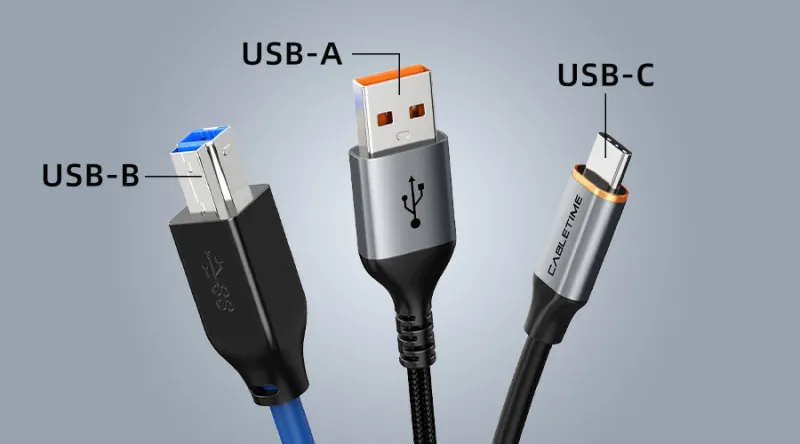
Same story with USB-A ports on budget hubs. The retention clips — the tiny spring-steel fingers that grip your USB plug — are often stamped from metal that's too thin to maintain tension after a few hundred insertion cycles. A properly speced USB-A port should handle at least 1,500 insertions per the USB-IF standard. Many budget units we've tested start showing loose connections well before 500.
The Materials Shell Game
Here's where it gets more subtle. Connector housings are almost universally made from some variant of nylon or polycarbonate. The difference between a housing that lasts a decade and one that cracks in two years often comes down to whether the manufacturer used virgin resin or recycled regrind — a cost difference of maybe a few cents per unit that adds up to millions across a production run.
You can't tell by looking. You usually can't tell by feel, either, at least not initially. But recycled regrind has inconsistent molecular weight distribution, which means stress fractures propagate faster, especially in environments with temperature cycling (like, say, a laptop adapter that heats up and cools down every single day).
The contact plating situation is similarly murky. Gold plating on connector contacts is specified in microns — and the difference between 15 microns and 3 microns is invisible to the naked eye but enormous in terms of corrosion resistance and contact life. Budget manufacturers routinely spec the thinnest plating that still passes initial quality inspection. By the time oxidation and wear degrade the connection enough to cause problems, you're well past warranty.
Incompatibility as a Business Model
Wear and materials are one thing. But some of the most effective obsolescence engineering isn't about physical failure at all — it's about making working hardware feel broken.
Firmware-locked compatibility is the big one. Several major laptop manufacturers have shipped power adapters with authentication chips that communicate with the host device. Use a third-party charger — even one that's electrically identical and fully USB-PD compliant — and the laptop either refuses to charge or throttles to a trickle. The adapter isn't broken. It's been made incompatible by a software decision.
Propriety connector geometry plays the same game. Apple's Lightning port, before the EU forced the switch to USB-C, had internal geometry that physically blocked certain third-party cables from seating correctly. The cables weren't defective. The tolerance was engineered to exclude them.
This stuff isn't illegal (usually), and manufacturers will tell you it's about safety and quality control. Sometimes that's genuinely true. But the effect — forcing you back to first-party purchases — is the same regardless of intent.
What Engineers Actually Say (Off the Record)
We spoke with two hardware engineers who've worked at consumer electronics companies — both asked to remain anonymous, which tells you something. The consensus was depressingly consistent: "Durability is always on the table as a cost lever," one told us. "The question in every design review is how long does it need to last to avoid returns and bad reviews, not how long can we make it last."
The other was blunter: "If a cable lasts five years, that's five years of revenue you didn't get. Nobody in the finance meeting is arguing for the five-year cable."
To be fair, both also noted that premium product lines — the ones where brand reputation is a core part of the value proposition — do get more durable component specs. The incentive structure just doesn't favor it everywhere.
How to Actually Buy Adapters That Last
Okay, enough doom. Here's the practical stuff.
Look for braided cables over rubber-jacketed ones. Nylon braid doesn't prevent internal wire fatigue, but it dramatically reduces the bending stress that causes the outer jacket to crack and fray. Anker's PowerLine series and Cable Matters' braided USB-C lines are solid examples at reasonable price points.
Check the strain relief length. Seriously, measure it or at least eyeball it. You want at least an inch of flexible relief on each end. If it's a rigid plastic nub shorter than your thumbnail, pass.
For USB hubs, prioritize brands that publish their chipset. Companies using VIA Labs or Genesys Logic chipsets tend to be more transparent about their hardware, which correlates with better overall build quality. If a manufacturer won't tell you what's inside, that's information.
Buy USB-IF certified cables for anything carrying significant power. The certification isn't perfect, but it does require third-party testing that catches the most dangerous shortcuts. Look for the USB-IF logo or check the certified products list at usb.org.
For laptop chargers, go GaN. Gallium nitride chargers run cooler than traditional silicon-based designs, which means less thermal stress on both the charger and its cable. Brands like Ugreen, Baseus, and Belkin's GaN lineup have all earned decent long-term reliability reputations in our testing.
Keep receipts and register products. This sounds obvious, but it's your only real leverage when something fails just past the warranty window. Manufacturers do sometimes make goodwill exceptions, especially if you can demonstrate a pattern of failures.
The Longer Game
The uncomfortable truth is that the market mostly rewards the race to the bottom on connector quality. Most people don't connect their adapter failure to a design decision made three years earlier — they just buy another one. Until that changes, the incentive to build for longevity stays weak.
But you can opt out of that cycle, at least partially. Spend a little more upfront, buy from brands with actual warranty support, and learn to recognize the physical tells of a product engineered to fail. Your junk drawer will shrink. Your frustration will too.
And next time an adapter dies suspiciously close to its warranty expiration, remember: that probably wasn't bad luck.